
Discover More On:
What Happens If You Ignore Wheel Alignment Issues?
Browse by Repair
It's one of the most common questions we hear at the counter: what happens if I don't get an alignment? Nothing dramatic happens on day one. The car still drives. But a misaligned car wears tires unevenly, pulls against you on every trip, and slowly loads extra stress onto steering and suspension parts that cost far more than an alignment to replace.
At Miller's Automotive in Orange Park, we see the full range, from cars that need a quick adjustment to cars where a skipped alignment has already eaten a set of tires. Here's what happens when alignment gets put off, how to spot it early, and when to schedule Wheel Alignment with our team.
Why Does Wheel Alignment Matter?
Wheel alignment sets the angles at which your wheels meet the road so all four tires roll straight and share the load evenly. Technicians adjust camber (inward or outward tilt), toe (whether the tires point in or out), and caster (the steering angle that helps the wheel return to center). Potholes, curbs, and worn parts nudge those angles off spec over time. Around Orange Park, rain-hidden potholes and tight curb cuts along Park Avenue and Blanding Boulevard are the usual suspects.
Symptoms of Skipped Alignment: Tire Wear, Pulling, and Vibration
The most common symptoms of a skipped alignment are uneven tire wear, a car that pulls to one side, and a steering wheel that sits off center or shimmies. Any one is worth a check. Two or more together usually point straight to alignment.
Uneven or Feathered Tire Wear
Wear along only the inner or outer edge usually points to camber. A feathered edge, where tread blocks feel smooth one way and sharp the other, is a classic toe issue. An alignment stops the damage but can't bring back lost tread.
Pulling or Drifting to One Side
Most roads are crowned to shed rain, so a very slight drift toward the shoulder can be normal. A pull you have to fight is not. Low tire pressure or a sticking brake caliper can also cause a pull, so we rule those out first.
Off-Center Steering Wheel or Vibration
A crooked steering wheel on a straight road means the alignment has shifted. Vibration is more often a balance problem or a bent wheel, but the same pothole can cause both, so we check them together.
Safety and Handling Effects of Misalignment
Misalignment makes your car less predictable right when you need it most. Uneven grip means braking, swerving, and cornering all lose precision.
On a dry commute, that might only feel like a car that wanders. In a sudden stop on I-295 or a summer downpour on US-17, it matters more. A car that pulls can dart to that side under hard braking, and worn tire edges channel less water, which raises the risk of hydroplaning. Constantly correcting the wheel on the drive over the Buckman Bridge also adds real fatigue.
What Happens the Longer You Delay
The longer you delay, the further the damage spreads, from tire tread to fuel costs to steering and suspension parts. Misalignment never corrects itself. If you're wondering what happens if you don't get a wheel alignment for months, here's how it usually plays out.
The First Few Weeks
You may notice a slight pull or a crooked wheel. Tire wear has started but is hard to see. This is the cheapest point to fix it.
Several Months Later
Uneven wear becomes visible and tire life drops. Many drivers replace a pair of tires thousands of miles early.
Fuel Costs Add Up Too
Misalignment affects fuel efficiency too, usually by a modest amount. Tires that scrub sideways create extra drag, and your engine burns more fuel to overcome it. It adds up over a year of driving around Clay County.
The Long Run
Months of bad alignment put steady stress on tie rod ends, ball joints, and wheel bearings. We've seen cars need suspension work and a full set of tires when an earlier alignment would have covered it.
Wheel Alignment Inspection Steps
A proper alignment inspection starts with the tires and suspension, not the alignment machine.
Quick Checks You Can Do at Home
Look across each front tire for wear on one edge and run your hand over the tread for a feathered feel. Check pressure when tires are cold, since Florida heat pushes readings up by afternoon. On a quiet straight road, see whether the steering wheel sits centered.
What We Check in the Shop
- Road test to confirm any pull, wander, or vibration
- Inspect tire pressure, tread depth, and wear patterns
- Check tie rods, ball joints, and bushings for play
- Measure camber, caster, and toe on our Hunter Hawkeye Alignment Machine
- Adjust to factory specs, center the steering wheel, and road test again
Worn parts must be replaced first, or the new settings won't hold. Many newer vehicles also need a steering angle sensor reset after an alignment so lane-keeping and stability systems read correctly.
When to Book Alignment Service
Book an alignment check as soon as you notice pulling, uneven tire wear, or an off-center steering wheel, and after any hard hit to a pothole or curb. Don't wait for all three signs.
For routine care, have your alignment checked about every 6,000 miles, which lines up well with a Tire Rotation, and at least once a year. Plan on an alignment with new tires and after any steering or suspension repair.
Late summer is a smart checkpoint here. After months of afternoon storms, potholes open up on roads like Kingsley Avenue and Wells Road, and standing water hides them. If your car came through this rainy season feeling off, pair the check with Preventive Maintenance and handle it in one visit.
Takeaways
Asking what happens if I don't get an alignment usually means something already feels off. Skipping it leads to uneven tire wear, a car that pulls, weaker handling in wet weather, and eventually strain on steering and suspension parts. None of it fixes itself.
Caught early, the fix is a simple adjustment. For Orange Park drivers dealing with storm-season potholes and busy commuter roads, a regular alignment check is one of the easiest ways to protect your tires, your safety, and your budget.
Frequently Asked Questions
What happens if I don't align my tires after buying new ones?
Your new tires start wearing to match whatever problem the old ones had. Many treadwear warranties also exclude wear caused by misalignment. If you're due for Tire Installation, book the alignment in the same visit.
How long does a wheel alignment take?
Most alignments take about an hour when steering and suspension parts are in good shape. If we find a worn part, we'll explain your options before doing any extra work.
Do I need a two-wheel or four-wheel alignment?
Most modern cars and SUVs benefit from a four-wheel alignment because the rear angles are adjustable too. Some vehicles with a solid rear axle only allow front adjustments, and we'll tell you which applies to yours.
Can hitting one pothole really knock my alignment out?
Yes. A hard hit at speed can shift alignment angles or bend a steering part in a single moment.
Is it safe to drive with bad alignment for a while?
A mild alignment issue is usually drivable for a short time, but it isn't something to ignore. If the pull is strong or the steering feels loose, get it inspected before any long trip.
Get Your Wheel Alignment Checked at Miller's Automotive in Orange Park
Founded in 2008 by Ted Miller, Miller's Automotive helps drivers across Orange Park, Fleming Island, Oakleaf, and Middleburg keep their cars tracking straight. Our ASE Certified technicians inspect tires, steering, and suspension before aligning your vehicle to factory specs, and our digital vehicle inspections show you photos and videos of what we find. If worn parts are behind the problem, we'll walk you through your Suspension, Steering & Wheel Services options before any work begins. Our repairs are backed by warranties on parts and labor.
Call us at (904) 364-9499 or stop by 1156 Park Ave, Orange Park, FL 32073, Monday through Friday, 7:30 AM to 5:30 PM.
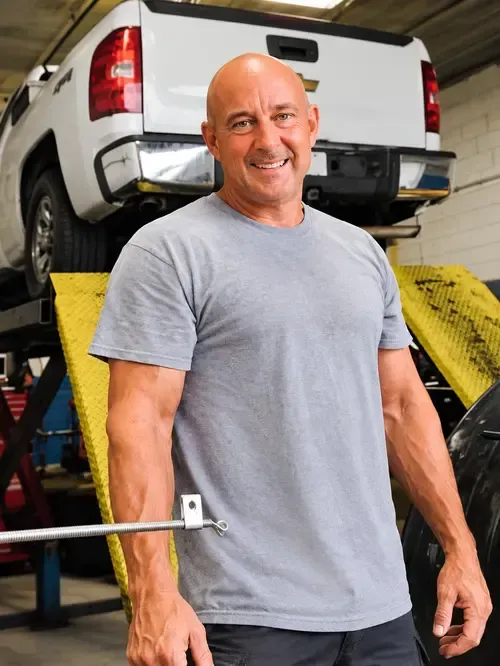
Edward Jay "Ted" Miller
Edward Jay "Ted" Miller is the founder and owner of Miller's Automotive in Orange Park, Florida, where he also serves as shop manager and lead technician. A lifelong Floridian raised in Orange Park, he has spent more than 35 years in the trade.
Ted started at Middleburg High School, completing three years of automotive mechanics training while actively participating in local car and motorcycle events. He came up as a tire and lube technician, then worked at Jim Martin Tires, Saturn of Orange Park, Firestone, and Goodyear, servicing domestic and import vehicles daily. He opened Miller's Automotive in 2008. Now an ASE-certified automotive technician, he still turns wrenches on brake repair and engine diagnostics for Toyota and other domestic and Asian vehicles.
Those years on the floor shaped how he runs the shop. Miller’s Automotive backs every repair with a one-year labor warranty. Ted has followed the same rule since 2008: repair each vehicle as if it belonged to family and recommend only the work it needs. Drivers looking for an auto repair shop in Orange Park, FL, get that same standard.
