
Discover More On:
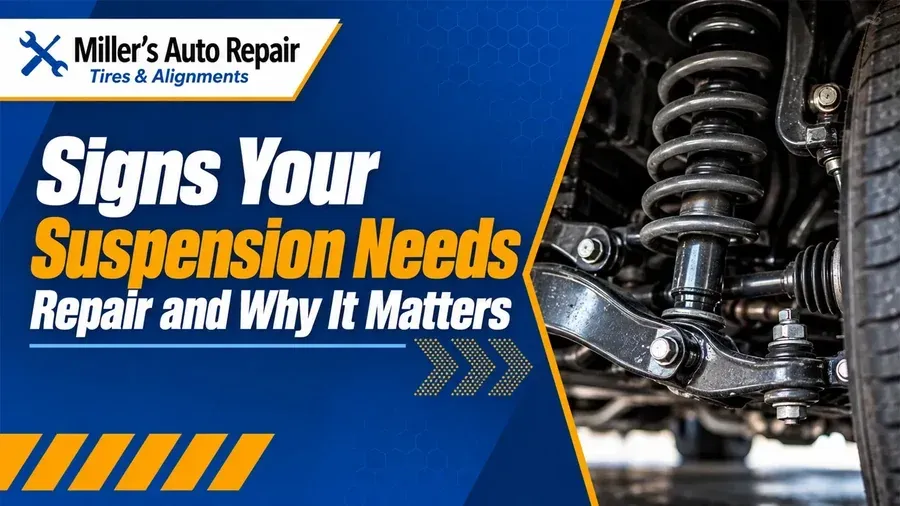
Signs Your Suspension Needs Repair and Why It Matters
Browse by Repair
Most drivers don't start looking for signs you need a new suspension until the ride gets harsh or the car starts wandering in its lane. By then, the problem has usually been building for a while. Suspension wear is gradual, and you adjust to it one bump at a time.
At Miller's Automotive in Orange Park, suspension questions come up almost daily, and the signs of bad suspension are easier to catch than most people think. Here's what to look, listen, and feel for, which parts usually fail, and how our Suspension, Steering & Wheel Services team decides between repair and replacement.
Why Is the Suspension System Important?
Your suspension does two jobs at once. It soaks up bumps so the cabin stays comfortable, and it keeps all four tires pressed firmly to the road so you can steer, brake, and corner with control. When it wears, you lose both, and the second loss is the dangerous one.
Orange Park roads give suspensions a steady workout. Patched pavement and construction on Blanding Boulevard, Wells Road, and Park Avenue add up to thousands of small impacts a year.
Warning Signs and Ride Symptoms
The clearest symptoms of bad suspension show up in how the car rides: extra bouncing, nose-diving, uneven tire wear, new noises, and a car that sits lower on one corner. Here are the 5 signs your car's suspension needs repair that we see most often.
Bouncy or Rough Ride
If the car keeps bouncing after a dip or feels like it floats over bumps, the shocks or struts are losing their damping, the control that settles the car after each bump.
Nose Dives When Braking
A healthy suspension keeps the car fairly level under hard braking. If the front end dips sharply, or the rear squats when you accelerate, worn shocks or struts are the usual cause.
Uneven Tire Wear
Cupping, a pattern of scalloped dips around the tread, points to shocks that let the tire bounce off the road. Edge wear often ties back to worn bushings or ball joints knocking the alignment out.
Clunks and Knocks Over Bumps
A dull clunk over speed bumps or driveway lips usually means something has play in it, such as a sway bar link, a bushing, or a ball joint.
Sagging or Uneven Ride Height
If one corner sits lower than the others, or the rear sags with normal cargo, a spring may be weak or broken. Drivers who tow a boat to Doctors Lake or the St. Johns River often see this first.
Steering Symptoms
Steering symptoms of suspension trouble include pulling to one side, loose or wandering steering, and clunks or stiffness when you turn. Your steering and suspension share parts, so a problem in one quickly shows up in the other.
Pulling or Drifting
A pull often looks like an alignment issue, but worn control arm bushings or ball joints are frequently what knocked the alignment out.
Loose or Wandering Steering
If you're making constant small corrections on I-295 just to stay centered, worn tie rod ends, ball joints, or a tired steering rack may be letting the wheels move on their own.
Clunks or Stiffness in Turns
Clunking in slow parking lot turns points to ball joints, strut mounts, or CV joints. Stiff or notchy steering can come from a seized strut bearing or a failing rack, which our Rack & Pinion Replacement service handles.
Common Components That Fail
The parts that fail most often are shocks and struts, control arm bushings, ball joints, tie rod ends, sway bar links, and coil springs.
Shocks, Struts, and Springs
Shocks and struts usually wear out long before they leak visibly. Coil springs can sag or snap, especially once corrosion sets in. Our Shocks & Struts Replacement service restores damping and ride height together.
Bushings, Ball Joints, and Links
Rubber bushings dry out and crack faster in constant Florida heat. Ball joints and sway bar links wear at their sockets and start to knock.
Signs of Suspension Rust Damage
Humidity, afternoon storms, and salt air from beach trips all speed up corrosion underneath. Signs of suspension rust damage include flaking scale on control arms, orange streaks around strut mounts, rust pitting on coil springs, and bolts that are rusted solid.
Diagnostic Checks: What a Suspension System Check Covers
A suspension system check combines a road test, a visual inspection, and a hands-on check for play in every joint. Some signs show up at home, but a lift inspection finds what you can't see from the driveway.
Checks You Can Do at Home
Park on level ground and see if the car sits evenly. Look for oily residue on shocks, and run your hand across the tread for cupping. Pushing down hard on each corner is a rough bounce test, but modern shocks can pass it and still be worn, so treat it as a hint, not a verdict.
What We Check in the Shop
We start with a road test over bumps and turns, then inspect on the lift. Our ASE Certified technicians check ball joints and tie rods for play, look for leaking shocks, cracked bushings, broken springs, and rust, then measure alignment on our Hunter Hawkeye Alignment Machine. Our digital vehicle inspections send you photos and videos of anything we find. We recommend an inspection every 12,000 to 15,000 miles, or sooner if you notice symptoms.
Safety Impact of Car Suspension Problems
Suspension trouble reduces your control in exactly the moments you need it: hard stops, sudden swerves, and wet roads. Worn shocks extend braking distance because the tires skip instead of gripping.
They also weaken the systems built to protect you. ABS and stability control rely on steady tire contact, and a bouncing tire gives them less to work with. In a summer downpour on US-17, that can mean more hydroplaning. Worn parts also let the body sway more in an emergency lane change, especially in a taller SUV or truck.
Repair vs. Replacement
A repair replaces only the worn part, such as a sway bar link, a bushing, or a ball joint, and keeps the rest of the system in place. Replacement swaps out larger assemblies, like shocks, struts, or control arms, when the part itself is spent.
Many problems start small. A clunking sway bar link is a quick fix, but left alone, that looseness can wear bushings and tires too. When we inspect your vehicle, we sort recommendations by priority: what needs attention now, what can wait a few months, and what to watch. Nearly every suspension repair should be followed by a Wheel Alignment, since new parts change the angles.
When Replacement Is Necessary
Replacement is necessary when a part is leaking, broken, rusted through, or worn past spec, or when a worn out suspension no longer keeps the car stable.
Clear signs you need a new suspension component include shocks or struts leaking fluid, a cracked or broken coil spring, ball joints with measurable play, and rust that has eaten into a control arm or strut mount. Shocks and struts also wear out with mileage, often somewhere between 50,000 and 100,000 miles, and should be replaced in pairs on the same axle. Trucks and SUVs with factory air ride have their own failure points, like leaking air springs or a tired compressor, which our Air Suspension service covers.
Takeaways
Suspension trouble rarely arrives all at once. A bouncier ride, a clunk over bumps, uneven tire wear, or steering that wanders are all early warnings, and catching them early usually means a smaller repair.
For Orange Park drivers dealing with patched roads, summer storms, and humid air that invites rust, a regular suspension check is one of the simplest ways to keep your car safe, stable, and comfortable.
Frequently Asked Questions
How long does shock and strut replacement take?
Most shock and strut jobs take about 2 to 4 hours. Time depends on the vehicle and how many corners need work.
Can I drive with a bad suspension?
You can usually drive short distances with mild wear, but it isn't something to put off. If you hear loud clunks, see a broken spring, or feel the steering go loose, have the car inspected before driving further.
Do I need an alignment after suspension repair?
In most cases, yes. Replacing struts, control arms, tie rods, or ball joints changes the wheel angles, and skipping the alignment can wear new tires quickly.
How can I make my suspension last longer?
Keep your tires properly inflated, slow down for potholes and speed bumps, and avoid overloading the vehicle. Pairing an inspection with routine maintenance catches small issues before they spread.
Does rust always mean my suspension needs replacing?
No. Light surface rust is normal on most undercarriage parts and doesn't affect strength. We recommend replacement only when rust has weakened the metal or seized a part that needs to move.
Get Honest Suspension Repair from Miller's Automotive in Orange Park
Founded in 2008 by Ted Miller, Miller's Automotive helps drivers across Orange Park, Fleming Island, Oakleaf, and Middleburg get their ride and handling back. Our ASE Certified technicians inspect the whole system, show you what we find, and give you a transparent upfront quote with no hidden fees. We only recommend what your car actually needs, and our repairs are backed by warranties on parts and labor.
Call us at
(904) 364-9499 or stop by
1156 Park Ave, Orange Park, FL 32073, Monday through Friday, 7:30 AM to 5:30 PM.
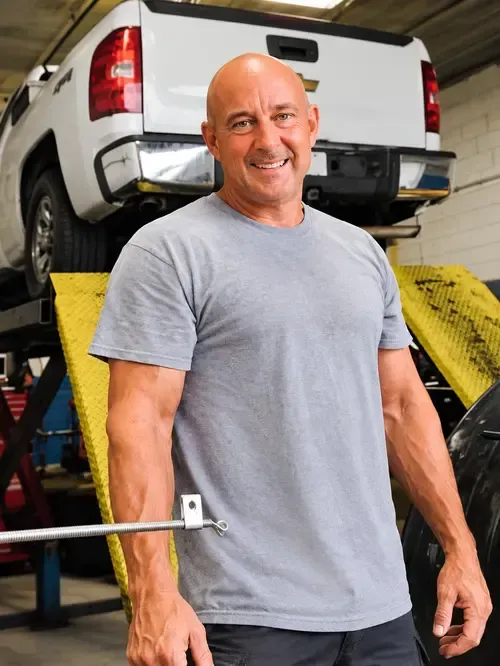
Edward Jay "Ted" Miller
Edward Jay "Ted" Miller is the founder and owner of Miller's Automotive in Orange Park, Florida, where he also serves as shop manager and lead technician. A lifelong Floridian raised in Orange Park, he has spent more than 35 years in the trade.
Ted started at Middleburg High School, completing three years of automotive mechanics training while actively participating in local car and motorcycle events. He came up as a tire and lube technician, then worked at Jim Martin Tires, Saturn of Orange Park, Firestone, and Goodyear, servicing domestic and import vehicles daily. He opened Miller's Automotive in 2008. Now an ASE-certified automotive technician, he still turns wrenches on brake repair and engine diagnostics for Toyota and other domestic and Asian vehicles.
Those years on the floor shaped how he runs the shop. Miller’s Automotive backs every repair with a one-year labor warranty. Ted has followed the same rule since 2008: repair each vehicle as if it belonged to family and recommend only the work it needs. Drivers looking for an auto repair shop in Orange Park, FL, get that same standard.
