
Discover More On:
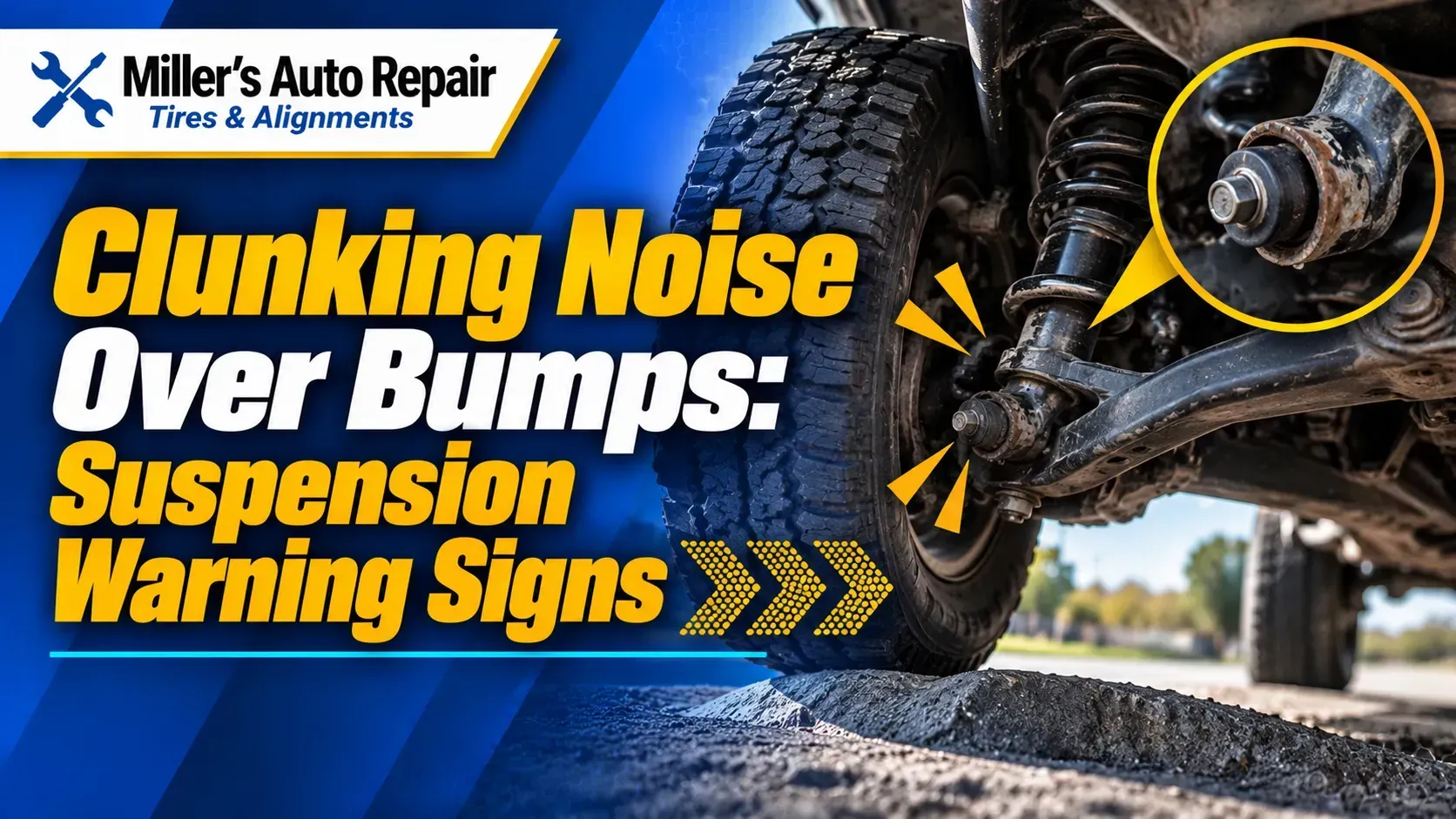
Clunking Noise Over Bumps: Suspension Warning Signs
Browse by Repair
A clunking noise over bumps often means a suspension or steering part has looseness, wear, or damage. Before any suspension and steering repair, we reproduce the noise and check the full assembly. Note whether one-wheel bumps, steering, or braking trigger it.
What a Clunking Noise Over Bumps Can Mean
A suspension clunk usually comes from unwanted movement between connected parts. Worn bushings, loose joints, damaged mounts, or broken hardware can shift as a wheel moves. Brake hardware, an exhaust hanger, an engine mount, or cargo can sound similar, so inspection should come before parts replacement.
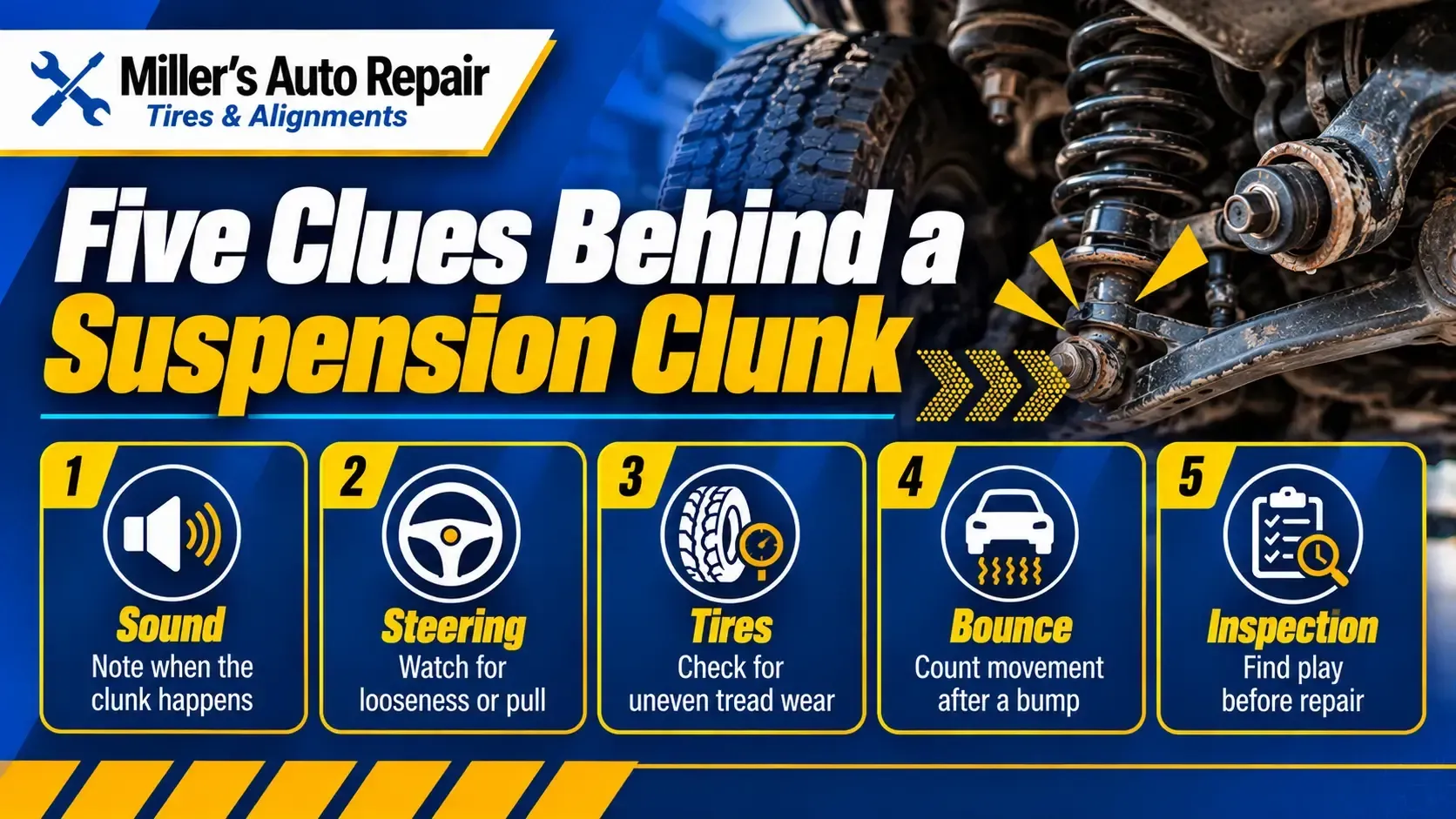
Common Suspension Parts That Cause Clunks
Common sources include sway bar links, bushings, ball joints, strut mounts, springs, and tie rods. The sound pattern helps narrow the cause.
Sway Bar Links and Bushings
A worn sway bar link may knock when one wheel moves more than the other, such as on an angled driveway. The bushings that hold the bar can also split or loosen, creating low-speed noise that fades on smooth roads.
Control Arm Bushings and Ball Joints
Torn control arm bushings can let the arm shift during a bump, braking, or acceleration. Worn ball joints can create joint play along with vague steering, pulling, or uneven tire wear. These worn suspension components need prompt attention when they affect wheel control.
Strut Mounts, Shocks, and Springs
Strut mounts can clunk when their rubber or bearing wears. Broken springs, loose shock mounts, or damaged spring seats can sound similar. Our shocks and struts replacement service starts with inspection because worn dampers more often cause bouncing or nose-diving than one sharp clunk.
Tie Rods and Steering Components
Tie rod wear can create a knock with loose or delayed steering response. A steering rack mount may also move under load. If the clunk comes with changes in steering, have it inspected before you keep driving normally.
Suspension Warning Signs Beyond the Noise
The most useful suspension warning signs involve steering, tire wear, body movement, and changes after an impact. Multiple symptoms may mean the problem affects handling, not comfort alone.
Loose or Wandering Steering
Loose steering may feel delayed or require frequent correction on a straight road. Tie rods, ball joints, bushings, a steering rack, or alignment may be involved. Avoid high speeds when steering feels unpredictable.
Uneven Tire Wear or Pulling
Uneven tread wear or pulling can develop when a worn or bent part changes wheel position. An alignment and tire wear inspection measures wheel angles, but adjustment cannot correct a loose joint or damaged arm. Repair must come first.
Excessive Bounce, Lean, or Nose-Dive
Repeated bouncing after a bump suggests the shocks or struts are not controlling spring movement. Heavy leaning or nose-diving can point to the same problem and may reduce tire contact during steering or braking.
Changes After a Pothole or Curb Impact
A new clunk after an impact may indicate a bent arm, damaged link, shifted mount, broken spring, or changed alignment. Around Orange Park, rough patches on Blanding Boulevard and construction seams on Jacksonville commutes are common spots for a new clunk to show up.
Before leaving, drivers can use FDOT's FL511 traffic information to review construction, closures, and road conditions. Once driving, keep attention on the road.
If you drive a Jeep, our Jeep repair and maintenance team checks a new clunk against the model’s common suspension and steering wear points. We use the same diagnostic-first approach for cars, crossovers, SUVs, and pickups.
When Is It Safe to Keep Driving?
Driving may be possible for a short trip when the sound is mild and steering, braking, ride height, and tires remain normal. Stop when the clunk comes with instability, damage, or changed handling.
Stop and Arrange Towing
Stop driving if steering becomes unpredictable, a wheel looks out of position, the vehicle leans sharply, or a tire rubs another part. After a severe impact, pull over if the vehicle shakes, pulls hard, or makes repeated metal contact. Then arrange towing.
Schedule an Inspection Soon
Schedule an inspection when the vehicle handles normally but the noise repeats. Record the speed, road shape, wheel position, and corner where the sound seems strongest. With a car clunking over bumps only now and then, those details help us reproduce the noise.
How We Find the Source of the Clunk
We combine a road test with a hands-on suspension and steering inspection. The goal is to find the movement creating the noise, not replace the part most often blamed.
Road Test and Loaded Chassis Inspection
During the road test, we repeat the reported conditions. On the lift, we inspect bushings, joints, links, mounts, springs, dampers, tie rods, and steering connections. We may load a component to reveal play and document confirmed wear with photos or video.
Alignment Measurements and Verification
Alignment measurements can reveal geometry changes after an impact. We compare readings with component condition before deciding whether adjustment or repair is needed. At Miller's Automotive in Orange Park, FL, we provide a written estimate and verify the result after approved work.
Takeaways
A clunk can come from links, bushings, joints, mounts, springs, tie rods, steering connections, or non-suspension hardware. Diagnosis should confirm the source.
Loose steering, pulling, uneven tire wear, excessive bounce, or changed ride height should be checked promptly. If the noise keeps coming back, schedule suspension repair in Orange Park, FL. Stop driving if control or wheel position changes.
Frequently Asked Questions
Why does my car clunk when I go over bumps?
Your car may clunk over bumps because a suspension joint, bushing, link, mount, spring, or steering connection has developed wear or looseness. Brake hardware, exhaust parts, mounts, or loose cargo can sound similar, so an inspection is needed to identify the source.
Can worn sway bar links cause a clunk?
Yes, worn sway bar links can cause a clunk when one wheel moves more than the other. The sound is often noticeable on angled driveways, uneven seams, and low-speed bumps.
Does a clunk over bumps mean I need new struts?
No, a clunk over bumps does not automatically mean you need new struts. A strut mount, sway bar link, control arm bushing, ball joint, spring, or other component may be causing the noise.
How much does suspension repair cost?
Suspension repair cost depends on the failed part, vehicle design, related damage, and whether alignment is needed. We provide a written estimate after reproducing the concern and confirming the worn or damaged component.
Can I drive with a clunking suspension?
You may be able to drive a short distance if the sound is mild and steering, braking, ride height, and tire clearance remain normal. Stop and arrange towing if the vehicle pulls hard, steers unpredictably, leans, rubs a tire, or shows visible wheel or spring damage.
Schedule a Suspension Inspection in Orange Park
If your vehicle clunks over bumps or shows another handling change, contact our shop for a road test and suspension inspection. Call
(904) 364-9499 or visit
1156 Park Ave, Orange Park, FL 32073 so we can identify the source, show you the findings, and explain the repair options..
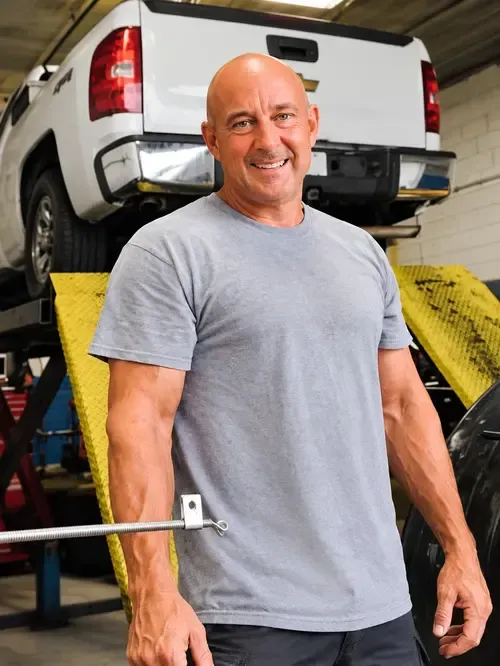
Edward Jay "Ted" Miller
Edward Jay "Ted" Miller is the founder and owner of Miller's Automotive in Orange Park, Florida, where he also serves as shop manager and lead technician. A lifelong Floridian raised in Orange Park, he has spent more than 35 years in the trade.
Ted started at Middleburg High School, completing three years of automotive mechanics training while actively participating in local car and motorcycle events. He came up as a tire and lube technician, then worked at Jim Martin Tires, Saturn of Orange Park, Firestone, and Goodyear, servicing domestic and import vehicles daily. He opened Miller's Automotive in 2008. Now an ASE-certified automotive technician, he still turns wrenches on brake repair and engine diagnostics for Toyota and other domestic and Asian vehicles.
Those years on the floor shaped how he runs the shop. Miller’s Automotive backs every repair with a one-year labor warranty. Ted has followed the same rule since 2008: repair each vehicle as if it belonged to family and recommend only the work it needs. Drivers looking for an auto repair shop in Orange Park, FL, get that same standard.
