
Discover More On:
Burning Smell After Braking in Orange Park: Is It Dangerous?
Browse by Repair
A burning smell after braking may follow heavy use, but it can also warn of a dragging or overheated part. Our brake safety inspection covers the whole system, not just the pads. If you notice smoke, a soft pedal, hard pulling, or weaker stopping power, pull over safely and stop driving.
Why Brakes Give Off a Burning Smell
Brakes turn motion into heat, so odor can follow hard use. A sharp smell that returns during normal driving may mean a pad, rotor, caliper, parking brake, or contaminant is overheating..
When a Hot Brake Smell May Be Temporary
A short-lived odor can follow new-part installation or one demanding stop. It should fade as the brakes cool without smoke, pulling, or pedal changes.
New Brake Pad Bed-In
New pads may release a mild resin odor while bedding against the rotors. Follow the supplied bed-in directions. Our brake pad replacement service includes correct seating and a final road test.
One Hard Stop or Heavy Brake Use
An emergency stop, downhill ramp, or repeated braking can create a temporary odor. The brakes should cool without changes in pedal feel or stopping distance. If a burning brake smell keeps coming back, have the brakes inspected.
Problems That Can Make Brakes Smell Burned
Persistent odor usually means friction or contamination is creating excess heat. Common causes include a sticking caliper, overheated friction material, a dragging parking brake, or fluid on a hot surface.
A Sticking Brake Caliper
A seized piston or slide pin can hold a pad against the rotor. Sticking brake caliper symptoms include pulling, extra dust, uneven pad wear, and one wheel running much hotter. Do not touch a wheel or rotor to compare temperatures.
Overheated Pads and Rotors
Overheated brakes can glaze pads, create rotor hot spots, and reduce friction. A hard or soft pedal, longer stops, vibration, or worsening odor may follow. Continued driving can increase brake fade.
A Parking Brake That Does Not Release
A cable, shoe, caliper mechanism, or actuator can keep the parking brake partly engaged. Watch for a smell from the rear, sluggish acceleration, or a parking brake light that stays on.
Fluid, Grease, or Road Debris
Brake fluid, grease, oil, plastic, or debris can reach a hot part and create smoke or odor. Contamination may also reduce pad friction, so the source must be found.
Warning Signs That Make the Smell Dangerous
A brake odor is dangerous when braking changes or heat damage appears. A soft pedal, brake fade, strong pulling, smoke, grinding, or a warning light calls for a safe stop.
Soft Pedal or Brake Fade
A sinking or spongy pedal may point to overheated fluid, moisture, a leak, or another hydraulic problem. Brake fade increases the effort or distance needed to slow, and it can worsen quickly.
Pulling, Smoke, or One Hot Wheel
Strong pulling can mean one brake is dragging or another is not applying. Smoke, a glowing rotor, or one extremely hot wheel calls for towing. Never pour water on hot brakes because sudden cooling can damage them.
Grinding, Vibration, or a Warning Light
Grinding may mean friction material has worn away, while vibration can follow rotor damage. The Florida Driver License Handbook lists pulling and scraping or squealing brakes among driver checks. A red warning light with changed pedal feel warrants a stop.
How Orange Park Driving Builds Brake Heat
Traffic, load, and driving habits affect brake heat. Stop-and-go stretches like Blanding Boulevard and US-17 give brakes little time to cool between lights.
Stop-and-Go Traffic and Short Trips
Repeated stops can keep brakes warm throughout a Fleming Island to Jacksonville commute. Florida humidity also lets brake fluid absorb moisture and lowers its boiling point. Our preventive maintenance inspections include measured fluid checks.
Towing, Hauling, and Vehicle Weight
Heavy vehicles and trailers make brakes absorb more energy. If you tow with an F-150 or haul loads out of Middleburg, follow Ford’s load and trailer-brake guidance. Our Ford truck and car repair team factors in how you use the truck when inspecting the brakes.
What to Do When Your Brakes Smell Hot
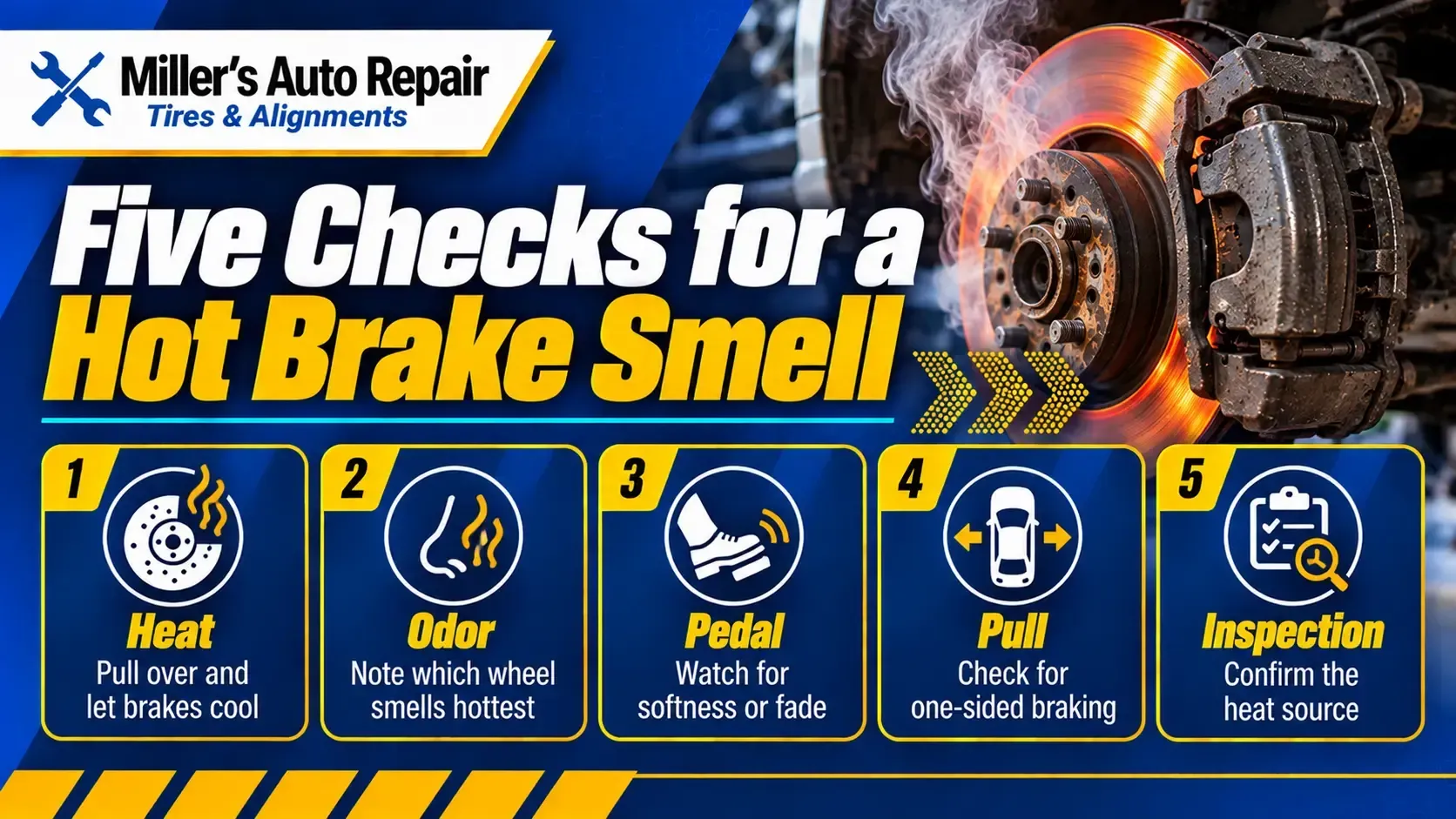
Move to a safe place and let the brakes cool. Do not crawl under the vehicle, touch a wheel or rotor, or keep driving to test the smell.
Stop Safely and Let the Brakes Cool
Use light, controlled braking to reach safety if the pedal feels normal. Shift to a lower gear where appropriate and keep clear of smoke. If flames appear, move away and call emergency services.
Know When to Tow or Schedule Service
Arrange towing for smoke, brake fade, a soft pedal, strong pulling, grinding, a glowing rotor, or wheel damage. If all functions remain normal after cooling, schedule an inspection before another long or loaded drive.
How We Diagnose a Burning Brake Smell
We reproduce the concern when safe, compare all four wheels, and inspect the friction and hydraulic systems. At Miller's Automotive in Orange Park, FL, we document measurements and provide a written estimate.
Temperature, Pad, and Rotor Checks
Temperature differences can identify a dragging corner. We compare pad wear, inspect rotor surfaces, and measure rotor thickness and runout. Heat checking, glazing, discoloration, or uneven wear helps confirm the source.
Caliper, Hose, Parking Brake, and Fluid Tests
We check piston travel, slide pins, hose restriction, parking brake release, hardware, and leaks. We also test brake fluid moisture or boiling-point condition when needed. Repairs target the confirmed cause.
Takeaways
A brief smell may follow new-pad bed-in or one hard stop, but it should fade without smoke, pulling, or pedal changes. Repeated odor can point to a dragging caliper, overheated pads, a stuck parking brake, or contamination.
Arrange towing when braking changes, smoke appears, or one wheel becomes extremely hot. Schedule brake repair in Orange Park, FL, before another long commute, towing trip, or loaded drive if the smell returns.
Frequently Asked Questions
Why do my brakes smell like they are burning?
Your brakes may smell burned because the pads or rotors are unusually hot. Heavy use, a sticking caliper, a dragging parking brake, contamination, or new-pad bed-in can cause it.
Can new brake pads smell after installation?
Yes, new brake pads can produce a mild odor during proper bed-in. It should fade without smoke, strong pulling, a soft pedal, or worse stopping performance.
Can a sticking caliper cause a burning smell?
Yes, a sticking caliper can hold a pad against the rotor and create constant heat. That wheel may collect extra dust, run hotter, wear unevenly, or cause pulling.
Should I drive if my brakes smell hot?
No, do not keep driving if the smell is strong or comes with smoke, pulling, grinding, or pedal changes. Stop safely and arrange towing when braking or wheel condition changes.
How long should a burning brake smell last?
A mild odor from one hard stop or new-pad bed-in should lessen as the brakes cool. If it remains or returns during normal driving, schedule an inspection.
Schedule a Brake Inspection in Orange Park
If you notice a burning smell after braking, note when it happens, where it is strongest, and whether the pedal or steering changes. Call
(904) 364-9499 or visit
1156 Park Ave, Orange Park, FL 32073. We will track down the heat source and walk you through the fix.
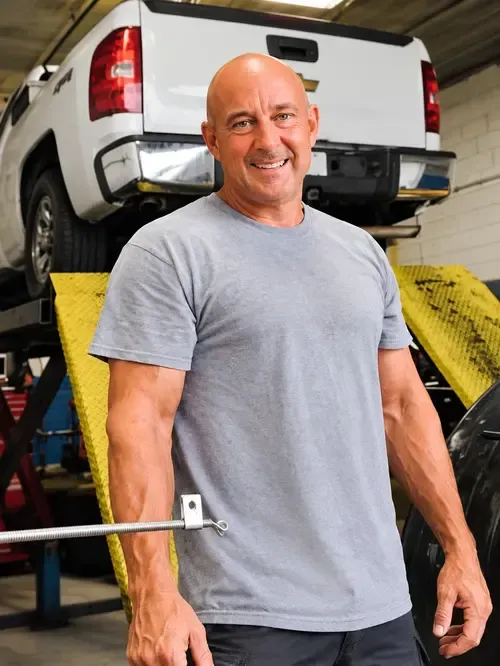
Edward Jay "Ted" Miller
Edward Jay "Ted" Miller is the founder and owner of Miller's Automotive in Orange Park, Florida, where he also serves as shop manager and lead technician. A lifelong Floridian raised in Orange Park, he has spent more than 35 years in the trade.
Ted started at Middleburg High School, completing three years of automotive mechanics training while actively participating in local car and motorcycle events. He came up as a tire and lube technician, then worked at Jim Martin Tires, Saturn of Orange Park, Firestone, and Goodyear, servicing domestic and import vehicles daily. He opened Miller's Automotive in 2008. Now an ASE-certified automotive technician, he still turns wrenches on brake repair and engine diagnostics for Toyota and other domestic and Asian vehicles.
Those years on the floor shaped how he runs the shop. Miller’s Automotive backs every repair with a one-year labor warranty. Ted has followed the same rule since 2008: repair each vehicle as if it belonged to family and recommend only the work it needs. Drivers looking for an auto repair shop in Orange Park, FL, get that same standard.
